
"Slugging" is the name of the latest trend in skin care, and it has quickly become popular not only among beauty experts but also among regular people who are interested in taking better care of their skin. Putting a layer of Vaseline or a lip balm on one's lips and then sleeping on them is an example of slugging. Because of the protective barrier that this develops over your face, it will be able to hold onto sufficient water during the night and remain well hydrated. In addition to that, it makes the skin texture smooth and silky, and it helps deal with pigmentation, acne scars, and blemishes, and may also help in anti-aging which results in your skin glowing from the inside out.
The protective barrier that petroleum jelly leaves behind on your skin functions as a barrier that prevents water from evaporating from the surface of your face, which is a major benefit of using this product. Dr. Church outlines the mechanisms behind why this may be so beneficial to your skin.
The act of slugging is quite uncomplicated. The following instructions should help you include it into your evening routine for taking care of your skin.
Dr. Church recommends that you begin your nighttime skin care ritual by washing, exfoliating, and moisturising your skin before you slug. "Slugging should only be done on clean skin," he says. Steer clear of skin care products that contain substances such as alpha-hydroxy acids, beta-hydroxy acids, and retinoids since they have the potential to irritate your skin if they become caught beneath the barrier provided by petroleum jelly.
Because it is sticky and thick, you only need a very small amount of petroleum jelly, and you do not necessarily need to apply it to your entire face. You are only permitted to use it on the areas of your face that are the most delicate and parched, such as your eyelids and lips.
Before you climb into the sack, give yourself approximately a half an hour, as this will give your products time to settle and start to soak in. During this period, you might want to preserve your pillowcase by placing a towel over it, and you might also want to wear a nightcap (the hair type, not the cocktail kind) to prevent your hair from clinging to your skin while you sleep. Both of these things can be done with a nightcap.
This phase is quite straightforward and easy to understand. Get a sufficient amount of sleep every night, since this will help your skin as well (not to mention your overall health).
You should always wash your face when you wake up, and doing so in this instance will help remove anything that has become adhered to the sticky petroleum jelly over the course of the previous night. The skin is a living organ that contains dead skin cells, oils, and bacteria that need to be able to slough off, according to Dr. Church. "Cleansing is vital because of this," he says.
Determine what your skin need from a cleanser before purchasing it. Dr. Church points out that while soap is a good emulsifier, it also has the potential to be drying. If you have the kind of sensitive skin that can improve with time, the cleansers that are gentlest on your skin but that also produce foam are usually your best bet.
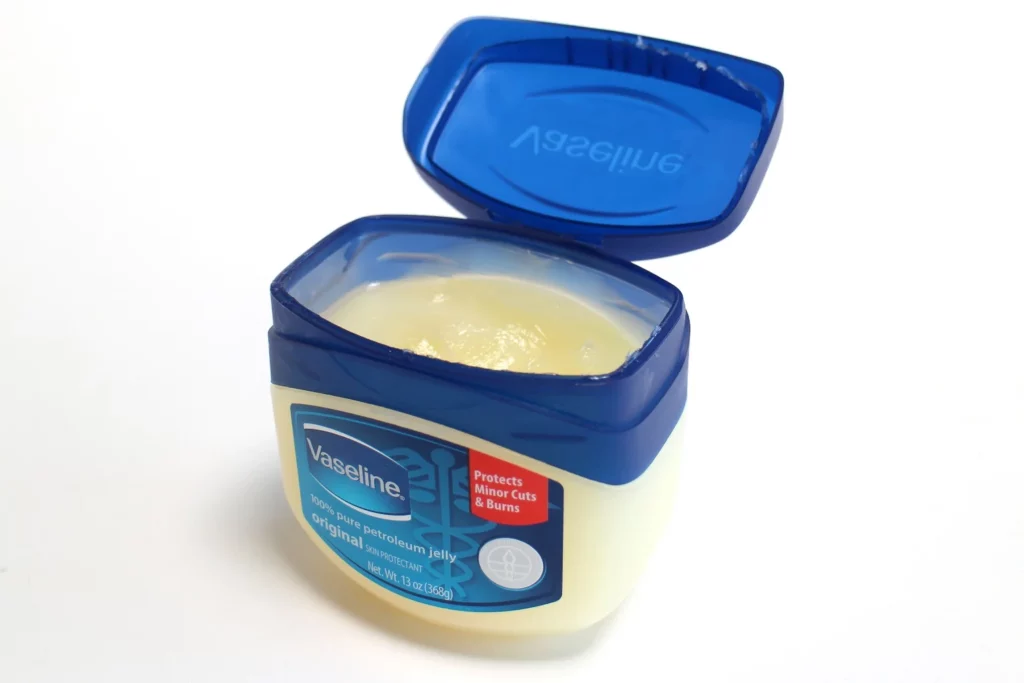
If you are going to attempt slugging, make sure that you are using pure petroleum jelly (Vaseline®) or petroleum jelly with only minimal extra components, such Aquaphor® and CeraVe®. This is something that Dr. Church recommends if you are going to try it. Hyaluronic acid and ceramides are components of both of them.
There are some people who shouldn't try slugging. Dr. Church discusses the different types of skin and disorders that should not use it.