
Laser hair removal stands out as a favored method for individuals seeking to diminish unwanted hair growth. The question, though, revolves around its permanence, and the answer isn't a simple one. Although laser hair removal provides more enduring outcomes than alternative hair removal techniques, it does not necessarily guarantee permanence. The effectiveness of this procedure can fluctuate based on factors such as skin type, hair color, and the specific laser technology employed.
The central goal of laser hair removal centers on substantially reducing hair growth in the treated areas. This is accomplished by directing intense beams of light onto the hair follicles, with the pigment in the hair shaft absorbing the light. The resultant heat generated from this energy impairs the follicles, impeding their ability to generate new hair. Through several sessions, most individuals observe a noticeable reduction in hair growth. Nonetheless, it's crucial to acknowledge that some hair follicles may persist and eventually regrow, albeit with hair that is thinner and lighter in color. Consequently, while laser hair removal can yield long-lasting results, periodic maintenance sessions may prove necessary to uphold the desired effect.
Laser hair removal is a well-liked method for achieving enduring hair reduction, rooted in the science of selective photothermolysis. In straightforward terms, it homes in on the pigment within hair follicles, heating them and rendering them incapable of re-growing hair. This process revolves around a laser that emits an intense beam of light, which the hair shaft and follicle absorb. The absorbed light transforms into heat energy, inflicting damage on the hair follicle while sparing the surrounding tissues. Consequently, through several laser sessions, hair follicles become less active, and hair growth substantially diminishes.
The effectiveness of laser hair removal hinges on various factors. Firstly, the hues of both hair and skin play pivotal roles. It is most effective on individuals with lighter skin tones and darker, coarser hair. The disparity in color between the hair and skin facilitates precise targeting of the hair follicles without causing harm to the surrounding skin. Furthermore, the stage of hair growth during treatment is critical. This method is most potent when applied to actively growing hairs since they contain more pigment. Hairs in the dormant or shedding phase may not respond as effectively, necessitating multiple sessions for optimal outcomes.
Imagine you've got a tattoo you don't want anymore, or perhaps some unwanted hair. You might consider laser treatment to get rid of it. The science behind that laser treatment is called "photothermolysis."
So, what's photothermolysis? The name itself is a clue. "Photo" means light, "thermo" refers to heat, and "lysis" means to break apart. Put it all together, and you get "using light to create heat to break something apart."
Here's how it works:
So, in simple terms, photothermolysis is a smart way to use light to heat up and break down something specific in your skin, without hurting the skin itself. It's the science that makes things like laser hair removal or tattoo removal possible. Pretty cool, right?
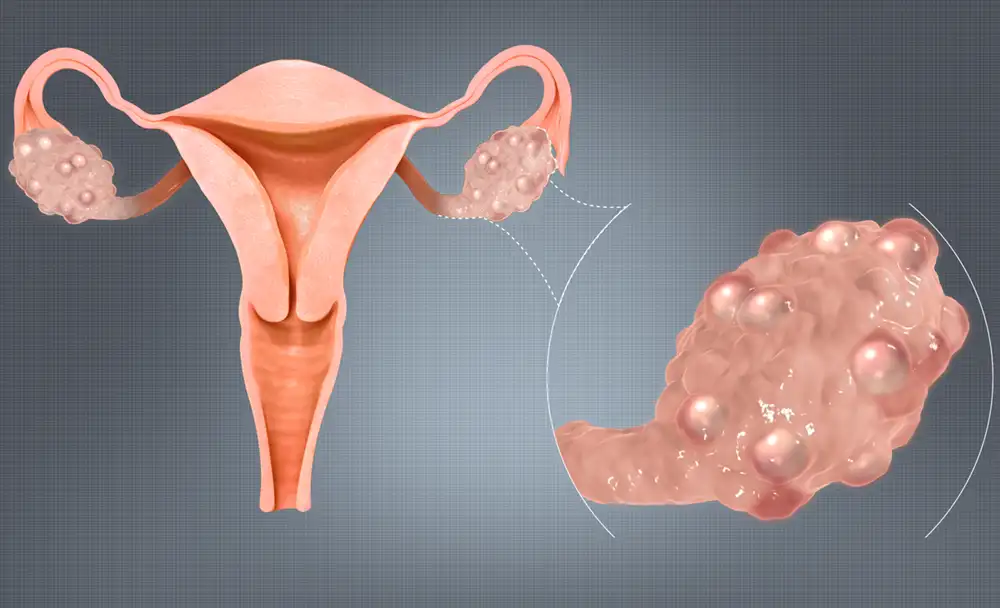
Illustration courtesy of https://en.wikipedia.org/wiki/Polycystic_ovary_syndrome
The effectiveness and permanence of laser hair removal are subject to various factors. A primary determinant is the color and thickness of the hair being treated. Laser hair removal operates by targeting the pigment within the hair follicle, making it more responsive to darker and thicker hair. Lighter or finer hair may necessitate additional sessions and may not yield the same enduring results. Moreover, the body area undergoing treatment can impact the longevity of the outcomes. Certain areas, such as the face or underarms, may require more maintenance sessions over time compared to areas like the legs or back.
Additionally, individual characteristics contribute to the permanence of laser hair removal. Skin type and color influence treatment effectiveness. Individuals with lighter skin and dark hair generally experience superior outcomes, as the laser can more effectively distinguish between the hair follicle and surrounding skin. Conversely, individuals with darker skin may require a different type of laser or a more cautious approach to minimize the risk of skin damage. Hormonal fluctuations and imbalances also factor in. Conditions like polycystic ovary syndrome (PCOS) can lead to heightened hair growth, necessitating ongoing sessions to sustain desired results.
We'll discuss Polycystic Ovary Syndrome (PCOS). Imagine your body as a well-oiled machine with hormones as the oil. If that oil isn't correct, what happens? Things may go haywire.
This is similar to PCOS. Exactly what is PCOS? Ovaries are affected by this hormonal condition, frequently during reproductive years. The term suggests that "Poly" means numerous, "cystic" denotes cysts, and "ovary" indicates the ovary.
Multiple ovarian cysts may seem like the cause, but it's more complicated.
Hormone imbalance is the fundamental issue. This can cause irregular periods, acne, and facial hair development. It's like your body's programming is off.
PCOS often causes ovarian cysts, although not always. Although innocuous, these cysts can be painful.
Ovulation may be irregular due to hormonal imbalance. This can hinder pregnancy.
Insulin Resistance: Some PCOS patients exhibit insulin resistance. This can cause obesity and diabetes if untreated.
Long-term Effects: Untreated PCOS can cause heart problems and endometrial cancer.
How to diagnose PCOS? No test exists for it. Doctors examine your symptoms, check hormone levels, and may do an ultrasound to examine your ovaries.
Treatment usually involves symptom management. This may require hormone-regulating birth control tablets or insulin therapy. Helpful lifestyle modifications include nutrition and exercise. In summary, PCOS is a hormonal illness that can impair your menstrual cycle and fertility. Though challenging, many people manage it with proper therapy and lifestyle adjustments.
Laser hair removal is frequently pitted against alternative hair removal techniques like waxing, shaving, and plucking. While these methods yield transient results, laser hair removal emerges as a longer-lasting solution.
Take, for instance, waxing—a process that entails applying hot wax to the skin and swiftly removing it, along with the hair. This approach can be rather painful and may lead to redness and irritation. Furthermore, waxing merely eliminates surface hair and does not address the root, meaning that hair will eventually resurface.
In contrast, laser hair removal employs focused beams of light to pinpoint and obliterate the hair follicle, thwarting future hair growth. This procedure can be tailored to suit individual skin types and hair colors, making it a more adaptable option compared to its counterparts. While multiple sessions may be needed for optimal results, the reduction in hair regrowth is substantial, offering a more enduring solution.

Several common myths regarding the permanence of laser hair removal warrant debunking. Foremost among these misconceptions is the belief that laser hair removal can completely and permanently eliminate all hair from the treated area. While laser hair removal excels in significantly diminishing hair growth, it falls short of guaranteeing a 100% permanent hair removal outcome. The results of laser hair removal treatments exhibit variations among individuals, contingent on factors like hair type, skin color, and hormonal fluctuations.
Another prevalent myth suggests that a solitary session of laser hair removal suffices to secure permanent results. In actuality, laser hair removal typically mandates multiple sessions to attain the desired outcome. This necessity arises from the fact that hair undergoes various growth stages, and the laser targets hair during its active growth phase. To ensure more enduring results, multiple sessions are imperative to capture all hairs in the active growth phase. Adhering to the recommended treatment plan and attending all scheduled sessions is crucial to maximize the efficacy of laser hair removal.
Despite the accolades received for its enduring results, laser hair removal's journey towards permanent hair reduction often involves multiple sessions. The role of these repeated laser hair removal sessions is pivotal in ensuring comprehensive targeting and effective treatment of all hair follicles.
In the initial session, the laser zeros in on and eradicates the actively growing hair follicles, leading to a noticeable reduction in hair growth. However, hair adheres to growth cycles, and not all follicles synchronize their active phases simultaneously. This is why multiple sessions prove indispensable—to capture each hair follicle during its active phase and guarantee its eradication.
As the treatment progresses, the laser progressively enfeebles the targeted hair follicles, resulting in finer and fewer hairs. This gradual decline in hair growth becomes increasingly evident with each subsequent session, culminating in smoother and more enduring results. The number of required sessions varies based on factors like hair color, skin type, and the treatment area. It is of utmost importance to adhere to the recommended treatment plan provided by the professional to attain the optimal outcome.
Following laser hair removal, understanding the regrowth pattern becomes a key consideration. Patients may observe diverse regrowth patterns in the treated areas, and it's vital to comprehend that laser hair removal does not yield immediate hair removal but instead initiates a gradual reduction in hair growth over time.
Typically, post-laser hair removal regrowth tends to be lighter, finer, and less conspicuous than before the treatment. This transformation stems from the laser's targeting and impairment of hair follicles, hindering their capacity to generate new hair. Nevertheless, it's crucial to acknowledge that some regrowth may persist, as not all hair follicles are permanently incapacitated. The regrowth pattern can also fluctuate based on individual factors like hair type, color, and the specific treatment area. Hence, cultivating realistic expectations is imperative, as achieving complete hair removal may necessitate multiple laser hair removal sessions.
It is essential to follow certain tips to ensure the longevity of laser hair removal results. Firstly, it is crucial to avoid sun exposure before and after the treatment. Sun exposure can make the skin more sensitive and increase the risk of complications. Therefore, it is advisable to limit sun exposure and use sun protection, such as sunscreen or protective clothing, to safeguard the treated areas.
Secondly, maintaining a consistent treatment schedule is vital for maximizing the effectiveness of laser hair removal. Depending on the individual and the area being treated, multiple sessions may be required to target all the hair follicles effectively. Adhering to the recommended treatment schedule ensures that all stages of hair growth are tackled, resulting in more long-lasting results.
Remember, following these tips can significantly contribute to enhancing the longevity of your laser hair removal results. By protecting your skin from excessive sun exposure and staying consistent with your treatment schedule, you can maximize the benefits and enjoy smoother, hair-free skin for an extended period.
Laser hair removal is typically regarded as safe when administered by a trained professional. However, akin to any medical procedure, it is not devoid of potential risks and side effects. One such risk entails skin discoloration, where the skin in the treated area may exhibit either lightening or darkening. Although this is usually a temporary occurrence, it may be more conspicuous in individuals with darker skin tones. Additionally, another potential side effect encompasses the formation of blisters or skin crusting, which may arise from excessively high laser settings or inadequate skin cooling during the procedure.
In certain instances, laser hair removal can also induce temporary redness, swelling, or irritation in the treated area. These side effects typically present as mild and tend to dissipate within a few hours or days. Nonetheless, in rare cases, more severe complications such as infection, scarring, or alterations in skin texture may manifest. It is imperative to address any apprehensions or potential risks with a qualified professional before undergoing the procedure. A comprehensive evaluation of the individual's medical history and skin type can mitigate risks and facilitate the development of the safest and most effective treatment plan.
For those in pursuit of permanent hair removal, several alternative options are available, catering to diverse needs when laser hair removal may not be the ideal choice. One notable alternative is electrolysis, a method employing electrical currents to annihilate hair follicles. Renowned for its capacity to deliver permanent hair removal, electrolysis is a favored option for individuals seeking a more enduring solution.
Another avenue to contemplate is intense pulsed light (IPL) therapy. Similar to laser hair removal, IPL targets hair follicles using light energy. However, IPL employs a broader spectrum of light, rendering it suitable for a wider array of hair and skin types. While IPL may not offer permanent hair removal outcomes akin to electrolysis, many individuals find it effective in curbing hair growth and achieving long-lasting hair reduction.
When delving into alternative methods for permanent hair removal, it is imperative to collaborate with a qualified medical professional or aesthetician to determine the most suitable approach for your unique circumstances. Individual hair and skin types, alongside desired outcomes, wield substantial influence over the efficacy of distinct techniques. Through exploration of these alternatives, individuals in pursuit of permanent hair removal can identify a solution that aligns best with their needs and attains the coveted results.
Laser hair removal can provide long-lasting hair reduction, but it may not permanently get rid of all hair follicles. Some hair regrowth may occur over time.
Laser hair removal is generally more effective than methods like shaving, waxing, or depilatory creams. It can provide longer-lasting results and reduce hair regrowth.
Factors like hair color, hair thickness, and skin type can affect the effectiveness of laser hair removal. Dark, coarse hair on light skin tends to respond best to treatment.
Yes, some myths include that laser hair removal guarantees permanent hair removal and that it works the same for everyone. It's important to have realistic expectations and understand individual variations in results.
Hair grows in cycles, and laser hair removal can only target hair follicles during the active growth phase. Multiple sessions are needed to catch all hair follicles at the right time for optimal results.
After treatment, you may experience a temporary reduction in hair growth. However, some hair regrowth is expected over time, which can be managed through occasional maintenance sessions.
Following the recommended treatment plan, protecting your skin from excessive sun exposure, and avoiding certain hair removal methods can help prolong the effectiveness of laser hair removal.
Possible risks include temporary skin irritation, redness, or pigmentation changes. Rarely, blisters or burns may occur. It's important to consult with a qualified professional to minimize risks.
Yes, alternatives like electrolysis and intense pulsed light (IPL) treatments are available for permanent hair removal. Each method has its own advantages and considerations, so it's best to consult with a professional to find the most suitable option for you.